Our certifications

What touches your skin matters. Here is what we hold, what each standard covers, and how to verify it.

When it comes to everyday basics, what touches your skin matters. From the fibres we choose to the way each piece is made, every step has an impact on your health, on the workers who make your clothes, and on the environment they come from.

Certifications help bring transparency to that process. They cut through greenwashing and give real, verified proof that what you are wearing meets strict standards for safety, sustainability, and ethics.

Pursuing these certifications means holding ourselves accountable at every stage. It means choosing cleaner materials, working with partners who share our values, and committing to processes that minimize harm and maximize care.

For you, it means peace of mind. It means knowing that your everyday essentials are free from harmful chemicals, made under fair conditions, and designed with intention, not shortcuts.

If you would like to understand GOTS in more detail, we wrote a full guide to GOTS certification.

Q for Quinn organic cotton, 2025 photography

The certifications currently relevant to our products

Three standards cover different parts of our range. GOTS for certified organic textiles, OEKO-TEX Standard 100 for harmful substance testing on trims, and RWS for responsible wool sourcing.

OEKO-TEX Standard 100

OEKO-TEX Standard 100 can be applied to many types of fibres, including synthetic fibres and conventional cotton. It focuses on testing finished materials for harmful substances.

Those harmful substances are also prohibited under the GOTS standard, which is why GOTS is often considered the stronger standard for certified organic textiles. OEKO-TEX Standard 100 is still useful where specific trims or synthetic components carry that additional testing, but we do not treat it as a substitute for GOTS.

When we use trims as part of a garment, we may also use OEKO-TEX Standard 100 certified components where relevant.

RWS (Responsible Wool Standard)

RWS applies to our wool products. It covers wool farming, animal welfare, land management practices, and traceability through the wool supply chain.

We are working toward broader GOTS coverage in the wool range. Supply and colours are more limited there, which is why it has been a bigger challenge to source until now.

Q for Quinn organic cotton basics styled

How certification applies across our range

Different products carry different certifications, and that is intentional. Certification follows the material mix and the supply chain behind that specific product.

Bras and underwear

Bras and underwear

Our bras and underwear are certified through GOTS. That certification applies to the finished product and the certified supply chain, not only the cotton fibre on its own.

Fibre content still varies by style. The Pointelle Bra and many underwear styles use 100% organic cotton, while styles like the Organic Racerback Sports Bra use a small amount of elastane where stretch is needed. The exact composition is listed on each product page.

Organic cotton socks

Organic cotton socks

Our organic cotton socks are also certified through GOTS. Most styles use very high organic cotton content with a small amount of stretch fibre for fit, and we also carry 100% organic cotton styles.

The product page is the right place to confirm whether a style is 98% organic cotton, 100% organic cotton, or uses another composition within the certified range.

Wool products

Wool products

Our merino products use RWS to verify wool sourcing, including animal welfare and land management. Some merino products also include organic cotton, but because these are blended products, the composition and certification story can vary by style.

That is why we treat the individual product page as the source of truth for merino blends.

Packaging

Packaging

Packaging certifications should be read separately from garment certifications. FSC applies to paper-based packaging materials, not to the textile product itself.

Our underwear ships in FSC-certified recyclable paper bags from Vela. Socks use paper-based packaging. Tags and care labels may also vary by product, which is why we separate packaging standards from garment certifications rather than blending them into one claim.

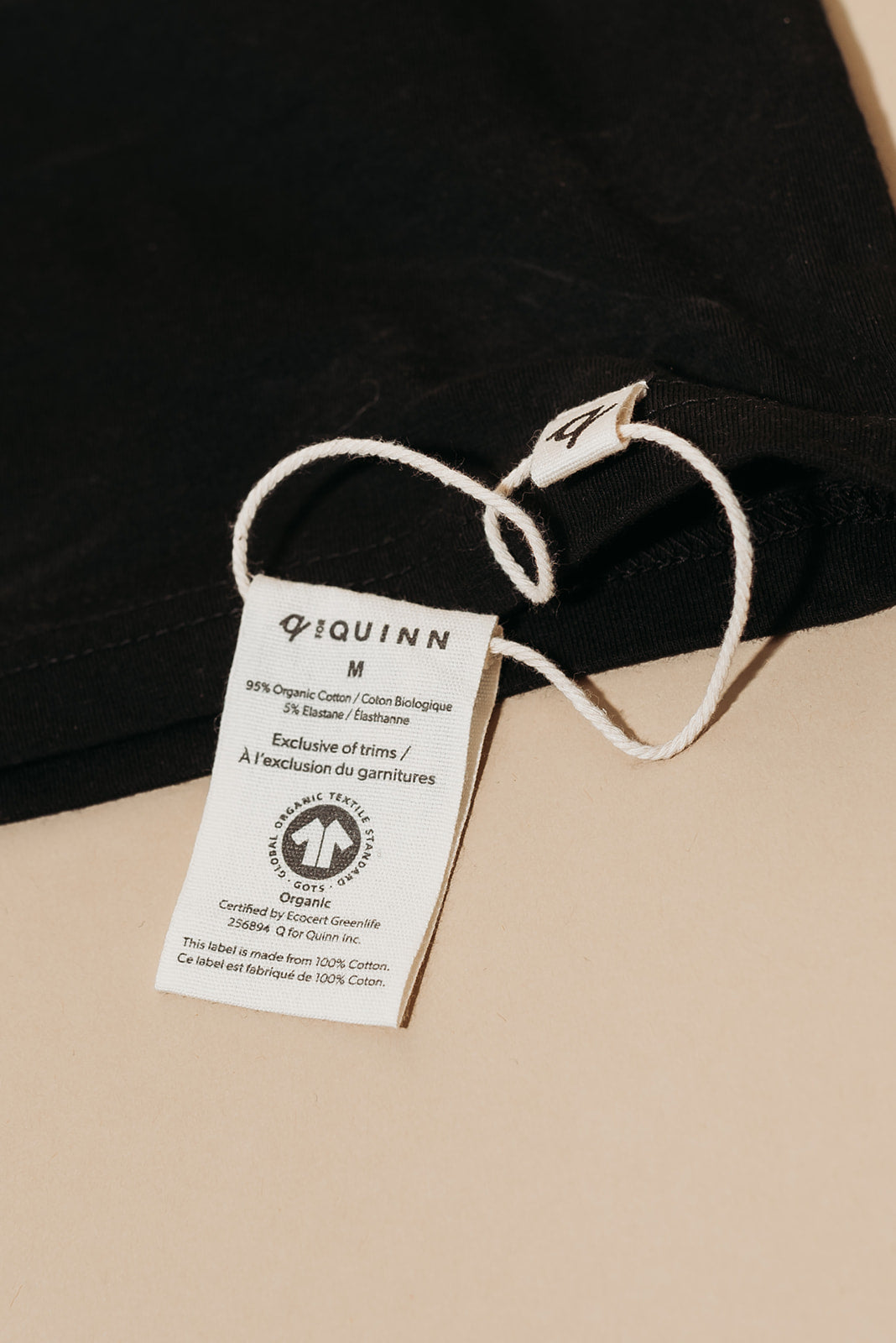
Verify our GOTS certification. Our GOTS licence number is 256894, certified through Ecocert Greenlife. You can verify it in the GOTS public database.

Frequently asked questions

What is the difference between GOTS and OEKO-TEX Standard 100?

GOTS is a supply chain certification for certified organic textiles. OEKO-TEX Standard 100 tests many types of fibres and materials for harmful substances. We use GOTS as our main standard for certified organic cotton products, and in some cases trims or components may also carry OEKO-TEX Standard 100 where relevant.

Which of your products are GOTS certified?

Our certified organic cotton bras, underwear, and many organic cotton socks are certified through GOTS. The easiest way to confirm a specific item is to check the individual product page, where the composition and certification details are listed for that style.

Do all your products carry the same certifications?

No. Certifications depend on the material and the supply chain behind the product. Our certified organic cotton products generally use GOTS, our wool products use RWS, and some packaging materials use FSC.

What is the difference between "Organic" and "Made with Organic"?

GOTS has two labeling grades. Organic is used for products with 95% or more certified organic fibres. Made with Organic is used for products with 70% to 94% certified organic fibres. Across our core certified organic cotton range, the products customers are most likely to see generally fall under the Organic label, but the product page is the best place to confirm a specific style.

How can I verify your certifications?

Our GOTS licence number is 256894. You can look it up in the GOTS public database. For product-specific details, the individual product page is the best place to check which certification and fibre mix apply to that item.

Do your wool products contain organic cotton?

Some of our wool products do include organic cotton. The exact blend depends on the item, so the product page is the best place to confirm the composition and certification details for a specific style.

Want to understand what these certifications mean in more detail? Read our complete guide to GOTS certification.