


We've always believed that the choices we make, from the materials we source, the partners we work with, and the products we put into the world, carry real consequences. This report is our way of being transparent about those choices: what we accomplished in 2025, where we're still working to improve, and why it all matters.
Materials Matter
We believe the materials in your clothes matter; for your health, for the health of the planet, and for the longevity of the garment itself.
Conventional apparel relies heavily on synthetic fibers and finishes that can emit harmful chemicals, persist in landfills for centuries, and shed microplastics into waterways. We've built our brand on a different premise: that natural, certified organic materials are better for the people wearing them and better for the world they'll eventually return to.
Our material portfolio reflects that commitment. The vast majority of what we make is crafted from certified organic cotton, with select styles in merino wool.

We choose GOTS-certified organic cotton over conventional cotton for a number of reasons. Certified organic cotton supports farming practices that use dramatically less water, eliminate toxic pesticides, and protect the health of farmers and their communities. We choose RWS merino wool because it’s important to us to invest in a fiber that is renewable, biodegradable, and safe for the skin.
Material choice is also the foundation of everything else in this report, from our journey toward fully biodegradable garments, to our manufacturing standards, to the durability that makes our products worth keeping for years.
Our Journey to Biodegradable Garments

Pictured above: Pointelle French Cut Bikini after 35 days of being buried.
One of the most exciting milestones we're working toward is something that sounds simple but is genuinely hard to achieve at scale: a garment that is fully biodegradable, from the main fabric all the way down to the thread and elastic.
Most people don't realize how much of a garment's environmental footprint lives in its trims. While many brands, including us, highlight the main fabric content, most don’t disclose the trims. Nearly every garment in production today relies on synthetic trims. Thread, elastic, and care labels are almost universally made from polyester or nylon, because industrial manufacturing has optimized for durability and performance, not end-of-life decomposition.
We've been working to change that.
In 2025, we began rolling out biodegradable products starting with our Pointelle Collection. Here's what that means in practice:
The elastics in select styles are now made from a natural rubber and organic cotton blend, replacing the conventional synthetic elastic found across the industry. We have also transitioned to 100% organic cotton thread for these plastic-free pieces, a change that we are currently rolling out across styles in our women’s underwear collection.
Any synthetic materials we still use, however minimal, are OEKO-TEX® Standard 100 certified, ensuring they are free from harmful substances.
It's also worth being transparent about what "biodegradable" requires us to hold ourselves to. For some styles, transitioning to fully natural trims is relatively straightforward. For others, the performance demands are higher: socks are a good example, where the construction requires a level of stretch that natural fibers alone can't yet reliably deliver at the quality standard we'd want to put our name on. We're committed to working through those challenges thoughtfully rather than making compromises we'd regret.
We know this can get technical. The simplest way to check the specifics for any product is to look at the "Materials & Care" section on each product page, where we list accurate trim details.

We are committed to continuing to push toward garments that leave nothing harmful behind.
For more on our biodegradable transition, see our earlier post here.
Our Dyes

Pictured above (left to right): Gabriella wears the Pointelle Bra and French Cut Bikini in Natural (made of undyed cotton pointelle), and the Criss Cross Bralette and Everyday Bikini in Dark Madder (made with plant based dyes).
Conventional textile dyes are among the most toxic inputs in apparel production, and their effects on waterways, factory workers, and the people wearing the finished garment are well documented.
We have three different approaches to dyes. Many of our styles are completely undyed, letting the natural colour of organic cotton speak for itself. Our undyed cotton collection contains no dyes, no colour processing and has absolutely nothing added. For styles where color is part of the design, we use either natural plant-based dyes or GOTS-approved dyes, which meet strict standards for environmental and human safety. Across our entire range, without exception, all of our dyes are azo-free, meaning they contain none of the chemical compounds linked to allergic reactions and long-term health risks.
In 2025, we expanded our undyed and plant-based dyed offering and we’re looking forward to continuing to expand these collections even further in the coming years.
How We Make Things: Our Manufacturing Practices

We hold our manufacturing partners to standards we're proud of, and we're committed to working with suppliers who share our values on environmental responsibility.
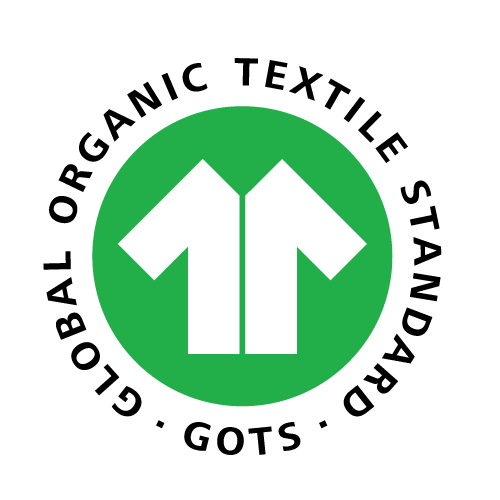
Every manufacturing partner we work with must meet GOTS (Global Organic Textile Standard) certification requirements, one of the most rigorous third-party standards in the apparel industry, covering not just the fiber content but the entire supply chain, from field to finished garment. GOTS compliance means strict environmental and social criteria at every step of production.
Our Underwear Manufacturer: India Factory

The factory that produces our underwear has made meaningful investments in clean energy and environmental stewardship. Their facility runs on approximately 198 kilowatts of total power, and solar generation now meets around 70% of their energy needs.
They have also planted approximately 200 trees around their factory premises as part of an ongoing effort to offset their environmental footprint and improve the land around them. They remain committed to further reducing their impact over time, and we're proud to partner with a manufacturer that takes those goals seriously.
Our Apparel and Sock Manufacturer: Portugal Factory

Our Portugal based manufacturing partner has built their operation around three core environmental goals: reducing water consumption, minimizing textile waste, and lowering the environmental impact of their energy use.
They've implemented a rainwater collection system that feeds directly into their washing processes, allowing them to reuse water.
Their production floor operates with a sharp attention to quality at every stage. Machines are stopped immediately when a non-conforming piece is identified, which saves significant quantities of raw materials and eliminates the need to destroy defective products after the fact.
Approximately 53% of their power comes from renewable sources, including hydro, wind, and solar.
Social Impact: Giving Back Through Every Purchase

We've always believed that a business can be a force for good beyond the products it makes. One of the clearest expressions of that belief is our ongoing partnership with Mary's Meals.
Mary's Meals is a global movement that sets up school lunch programs in communities that need it most. The promise is simple: if you come to school, you will be fed. That promise changes lives; keeping children in school, giving them the nutrition they need to learn, and relieving pressure on families living in extreme poverty.
In 2025, we donated $39,685 to Mary's Meals, funding 220,472 meals for children in need.
These are not abstract numbers. Each meal represents a child who showed up to school that day, who was fed, who had a better chance of learning something that might change the course of their life. We're proud to be part of that chain.
As our business grows, so does our giving. We're committed to increasing our impact with Mary's Meals year over year, and exploring additional ways to put our values into practice.
Looking Ahead
2025 was a year of meaningful progress. We introduced fully biodegradable products, improved manufacturing transparency, and the durability and quality that make our products worth choosing. It's also a year that showed us how much further we want to go.
We are committed to continuing the rollout of 100% biodegradable garments where we can, including finding a biodegradable option for bra hook and eye pieces (something that has proven difficult to source). We are deepening our conversations with suppliers about renewable energy and environmental goals. We are working toward a future where every garment we make can return to the earth cleanly, without leaving a trace.



Leave a comment