


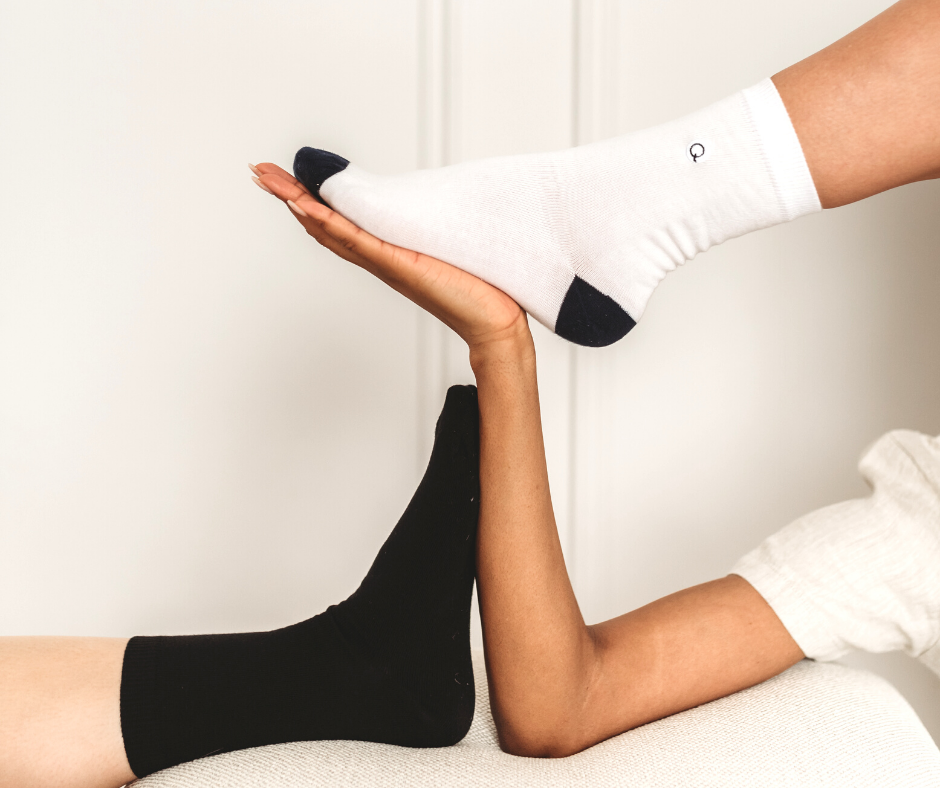
Nine years ago, a new mom went looking for organic cotton socks for her baby and couldn't find any. That search became Q for Quinn: a team of 11, a range of organic first-layer basics for the whole family, and close to 800,000 school meals donated.
For Small Business Saturday, we sat down with our founder, Melita Cyril, to ask how it happened. There was no single big moment. Her answer, again and again, was small changes, made consistently, over a long time.
"Small changes, being consistent, and showing up." – Melita Cyril
It started with a pair of socks
Melita's son was born in 2017. Seven months in, she was deep in the research that most new parents will recognise: checking everything he used, and asking whether there was a better alternative. His early eczema meant a strict moisturising routine, and organic cotton onesies and clothing.
"I just couldn't find organic cotton socks."
The more she looked, the less sense it made. Why were so many socks full of polyester and plastic? She had also been taking a break from the corporate world, with no paid maternity leave, and she had an itch to make something. She admits it sounds like a big leap from changing nappies to starting a sock company.
It wasn't a leap out of nowhere. Melita grew up around her father's business, which he started before she was born, and she had always wanted to build something of her own. "The timing was never right," she says. Then, in the autumn of 2017, it was.
The first version of the business was baby and kids focused: colourful, playful, always organic cotton and ethically made. Melita got carried away in the best way, even writing a children's book about socks that introduced the first patterns the brand launched. Based on customer feedback, she also brought in stuffed animals made from natural fibres, a gap in the market she says still exists today.
Bootstrapping, certification and a reason to keep going

Starting an online business was easier than it would have been a decade earlier. Shopify had gone mainstream, and an Instagram page cost nothing. Everything else was harder. Local sock manufacturing for baby and kids' products had all but disappeared from North America, so Melita sourced overseas, first with a factory in Sri Lanka, where her father helped as the main point of contact. When that factory closed, she started over and found the factory in Portugal that the brand still works with today (factory pictured above).
"The first time you do something, it feels really hard and overwhelming, but you learn from it."
Her advice for anyone starting out: don't be afraid to fail. "You fail fast, you learn, and you get back up."
GOTS certification took years, and it was worth the wait. Early on, Melita says, certification didn't make sense. The standard is expensive, the compliance is demanding, and when you're very small you wonder whether the business will exist next year. However, research on synthetic fibres was just emerging, and it validated what she was doing and why. Becoming GOTS certified, which she recalls took about three years, meant customers could be assured that every part of the supply chain was certified to high ecological and social standards, with products continually tested.
The hardest part wasn't the logistics. It was doing all of this while raising young children, and eventually three of them. Between little sleep, sick kids and promises made to customers, there were real sacrifices. Some days she had to put being a mom ahead of the business, and she doesn't regret it. She believed in the business, and customers believed in it too.
There was another thing that kept her going. Q for Quinn started giving back to Mary's Meals early, at a much smaller scale than today. When you're self-funded, she explains, you don't see the rewards of your hard work for a very long time.
"The validation for me was the meals we were donating and the customer feedback we were getting."
From a one-woman show to a family business

For a long time, Melita was the whole company. She started hiring slowly about two years in, because there wasn't money to do it any faster, and each new hire meant she could hand over some of her workload and spend more time on strategy.
Today the team is composed of 11 people around the world, 6 of them in Toronto, including the core marketing team. Some have been there since the early days. Others are newer, and Melita is focused on building a culture of people who believe in the mission and want to grow with it. Leading, she says, came with its own learning curve: getting people on board with her vision, then empowering them to make decisions without needing her in every one.
Two years ago, her husband joined as well. The business was growing and she needed more support on the operations side. As an engineer, he brings a very different skill set from hers, and she credits that as the reason it works.
"We parent three kids, and we're building this company. It's difficult being a parent, and it's difficult leading a company."
The biggest change is the weight of the decisions. For most of the journey, she says, it was lonely: no sounding board for which opportunities to chase, and no one to share the stress when something went awry. "Now the responsibility is more shared," she says. "Which helps a lot."
Listening, and growing up with our customers
If you visit the website today, you wouldn't guess it began with kids' socks. The range now covers what Melita calls the first layer for the whole family: intimates, socks and activewear, with a particular focus on women's wear. It grew out of customer feedback, and out of her own life as a busy, health-conscious mom of three who disliked wearing some of these everyday items and thought she could make a better version.
Customers also shaped the brand's direction from the jump. While the company was moving to socks that were around 98% cotton, it was still selling some of the older compositions that contained a small amount of polyester. A customer told Melita that having both on the shelf risked damaging the brand, and she took the point.
"We're constantly thinking about whether we're contradicting ourselves in any way, and how we can be more honest and transparent with our customers."
That applies to criticism as well. The team reads every review, including the negative ones. "We get a ton of positive reviews, but we learn the most from our negative reviews," she says. "I always believe our customer is right."
Design is where Melita spends much of her time. She estimates that 40% of her working hours go into product. Ideas come from her, the team and customers, and they go to a technical designer, then through many rounds of samples and fit tests. Melita wear-tests every product herself: sleeping in it, running in it, doing Pilates and yoga in it. Fit models and customers test as well, in a continuous feedback loop before anything launches.
What's next: a million meals and a global brand

Melita wants Q for Quinn to be a trusted household brand, known not just for how clean the products are, but for how comfortable and well made they are. Her goal is clothing that feels invisible. There's more to build, she says, including different layers for different preferences. She also wants the brand to be global. Growth in North America is going well, and the ambition goes further.
Then there's Mary's Meals. Q for Quinn has now donated more than 780,000 school meals, and the goal is a million within the next year. For Melita, it's personal. She grew up in Sri Lanka, where she was exposed to poverty and felt grateful to have been born into a family with means.
"I really wanted to show the world that business can be a vehicle for good."
Nine years on, she says, it feels both like forever and like a blink. The lesson she keeps coming back to is that nothing here happened overnight. It happened through the products, the customers, the team, and a lot of showing up.
This Small Business Saturday, thank you for being part of that story. Every order is a small step, and as Melita would tell you, small steps add up.



Leave a comment