


Non-toxic clothing are garments that have been independently verified to be free from PFAS (forever chemicals), BPA, formaldehyde, carcinogenic azo dyes, heavy metals, and pesticide residues. The term itself is unregulated; any brand can print 'non-toxic' on a label without verification. This guide cuts through that by rating eight brands that have third-party certifications to back their claims.
The brands on this list are evaluated using our Skin Safety Score, a three-pillar framework built around fabric purity, chemical safety, and supply chain transparency. Every brand must hold a verifiable third-party certification, GOTS, OEKO-TEX Standard 100, or Bluesign®, not just a marketing claim. None of the brands on this list paid for their placement.
How We Rate: The Skin Safety Score
Every brand is evaluated across three pillars. A score of 5/5 (Skin-Safe Gold) requires all three to be met at the highest level.
| Pillar | What We Measure | Why It Matters |
|---|---|---|
| Fabric Purity | Organic percentage per product, GOTS or OCS certification, presence of synthetic blends | Organic fibres grown without pesticides reduce residue risk at source |
| Chemical Safety | OEKO-TEX Standard 100, azo-free dyes, PFAS/BPA testing, and formaldehyde levels | Finished garment testing confirms no harmful substances remain after processing |
| Transparency | Full composition disclosed, supply chain traceable, named factories published | Verifiable claims — the brand can prove what it says |
What Actually Makes Clothing Non-Toxic?
Three certifications are meaningful for non-toxic clothing claims; everything else is marketing language:
-
GOTS (Global Organic Textile Standard) — covers the full supply chain. The cotton is grown organically (no synthetic pesticides or GMOs), and the processing chain prohibits harmful dyes, formaldehyde, chlorine bleach, and heavy metals. Annual third-party audit required. Verifiable at global-standard.org.
-
OEKO-TEX Standard 100 — tests the finished garment for over 1,000 harmful substances, including PFAS, BPA, azo dyes, formaldehyde, heavy metals, and pesticide residues. The most direct 'is this garment safe to wear' certification. Verifiable at oeko-tex.com/label-check.
-
Bluesign® — certifies safer chemistry throughout fabric processing. As of January 2025, all Bluesign® approved items must be free from intentionally added PFAS. Verifiable on the Bluesign website.
Red flags: 'water-resistant', 'stain-resistant', 'wrinkle-free', 'anti-odour' — these finishes have historically relied on PFAS or formaldehyde. 'Natural', 'eco-friendly', 'clean' — unregulated terms with no legal definition. Always check for the certification name and a verifiable number.
Quick Comparison: All 8 Brands at a Glance
| Brand | PFAS-Free | Key Certifications | Best For | Price | Made In |
|---|---|---|---|---|---|
| Q for Quinn | ✓ Yes | GOTS and OEKO-TEX for trims | Underwear, socks, basics | $$ | Portugal / India / Peru |
| MATE the Label | ✓ Yes | GOTS, B Corp, Climate Neutral | T-shirts, loungewear | $$–$$$ | USA (Los Angeles) |
| Jungmaven | ✓ Yes | GOTS + OCS | Hemp basics, casualwear | $$ | USA (Los Angeles) |
| Outerknown | ✓ Yes (PFC-free) | Fair Trade, Bluesign® factories | Men's casualwear, denim, outerwear | $$–$$$ | Multiple (Fair Trade factories) |
| Reformation | ✓ Yes | OEKO-TEX materials, Bluesign partner | Women's fashion, dresses, denim | $$–$$$$ | USA (Los Angeles) / Global |
| tentree | ✓ Yes | B Corp, Bluesign® factories, Climate Neutral | Casualwear, activewear, hoodies | $$ | Multiple (Bluesign factories) |
| Allbirds | ✓ Yes | OEKO-TEX (merino wool), B Corp | Casual basics, activewear | $$–$$$ | Multiple |
| Christy Dawn | ✓ Yes | N/A | Women's tops, dresses, basics | $$–$$$ | USA / India |
The Best Non-Toxic Clothing Brands in 2026
1. Q for Quinn
Materials
95–100% organic cotton; RWS-certified Merino Wool; organic biodegradable thread; dye-free and plant-dyed options
Certifications
GOTS (Ecocert Greenlife, Licence #256894), Recycled OEKO-TEX Standard 100 polyester thread, OEKO-TEX Standard 100 polyester-elastane blend elastics
Best For
Organic cotton underwear, socks, bras, activewear
Q for Quinn holds GOTS certification, meaning the cotton is organically grown without synthetic pesticides, and the finished garment is independently tested for PFAS, BPA, azo dyes, formaldehyde, and heavy metals. This dual standard is the highest available. Q for Quinn focuses on base layers, the garments with the longest skin contact: underwear, socks, bras, and activewear. GOTS certification is from Ecocert Greenlife (Licence #256894), verifiable at global-standard.org.
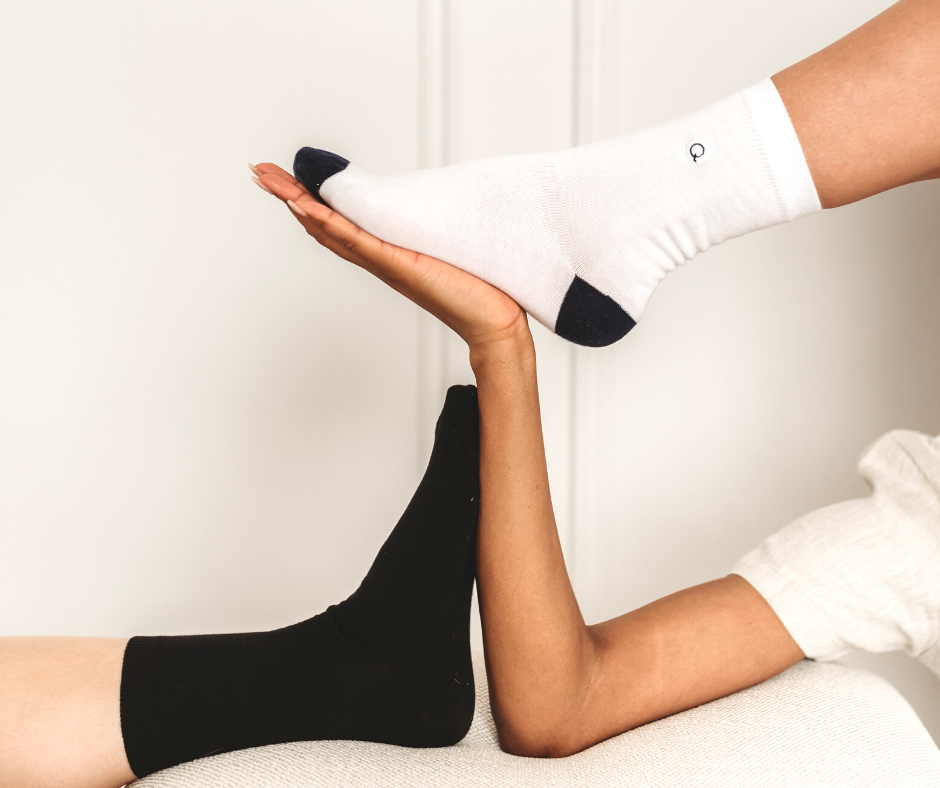
Q for Quinn offers a wide range of essentials, including organic cotton underwear for women, 100% cotton bras and bralettes, and 100% organic cotton socks. For sensitive or eczema-prone skin, Q for Quinn offers dye-free underwear and dye-free socks containing no dye residues at all, and plant-dyed underwear options using only botanical dyes. Factories in Portugal, India, and Peru are named on the website.
-
What we like: Dual GOTS certification and Dye-free and plant-dyed options. 95–100% organic cotton. Full factory transparency. Recycled OEKO-TEX Standard 100 polyester thread, OEKO-TEX Standard 100 polyester-elastane blend elastics.
- What to know: Focus is on underwear, socks, and basics, the highest skin-contact categories. For casualwear and outerwear, the brands below extend the non-toxic wardrobe.
2. MATE the Label
Materials
GOTS-certified organic cotton; organic yarns and non-toxic dyes
Certifications
GOTS, B Corp, Climate Neutral Certified
Best For
T-shirts, loungewear, sweatshirts, activewear, unisex basics
MATE the Label upholds a strict restricted substances list that prohibits over 50 harmful chemicals from its entire supply chain, verified through GOTS certification, B Corp status, and Climate Neutral certification. The brand's 'Dress Clean™' mission explicitly prohibits pesticides, BPA, PFAS, formaldehyde, and carcinogenic dyes. Every garment is cut, sewn, and dyed in Los Angeles, giving the brand direct oversight of the production process.
The range covers everyday organic basics, t-shirts, tanks, sweatshirts, hoodies, joggers, and activewear, all made with GOTS-certified organic cotton and non-toxic dyes. Packaging is plastic-free and compostable.
-
What we like: GOTS and B Corp dual certification. The restricted substances list has been published. No PFAS, BPA, or formaldehyde. Domestic LA manufacturing. Plastic-free packaging.
-
What to know: Some activewear pieces use a small percentage of spandex for stretch.
3. Jungmaven
Materials
Hemp and organic cotton blends
Hemp and wool blends
Certifications
Organic Textile Standard (GOTS), Organic Content Certified (OCS)
Best For
Hemp t-shirts, tanks, sweatshirts, casualwear, basics
Jungmaven has used hemp fabric since before it was a trend. Hemp is one of the inherently non-toxic fibres available. All Jungmaven products are blends of hemp with organic cotton to create t-shirts, tanks, and sweatshirts that are breathable, durable, and naturally free from the chemical residues found in conventional cotton.
All production takes place in Los Angeles. The organic cotton blended with hemp meets the Global Organic Textile Standard (GOTS) and is Organic Content Certified (OCS).
-
What we like: Hemp is inherently non-toxic and an organic fibre to grow, no pesticides, no irrigation, no GMOs. GOTS certification for organic cotton blends.
-
What to know: Check individual product fibre ratios; most items use a blend of organic cotton/wool and hemp, though exact percentages are not clearly stated.
4. Outerknown
Materials
Regenerative Organic Certified® cotton, recycled wool, recycled cashmere, spandex, ECONYL® (regenerated nylon from ocean waste)
Certifications
Regenerative Organic Certified® (ROC®)
Best For
Casualwear, denim, shirts, outerwear, knitwear
The brand uses Regenerative Organic Certified® (ROC) cotton, a standard that goes beyond organic to require soil-health improvement, animal welfare, and worker fairness. The brand promotes high labour standards in alignment with the Fair Labour Association and publicly shares our Fair Compensation Commitment. To learn more about regenerative cotton, check our "What Is Regenerative Cotton?" article.
Outerknown was one of the first brands to publish a public S.E.A. (Social Environmental Accountability) Standards document, detailing what it requires from every manufacturing partner.
-
What we like: Regenerative Organic Certified® cotton and a big commitment to sustainability.
-
What to know: The brand works with suppliers that hold certifications like GOTS, Fair Trade, and B Corp, but the brand itself is not certified at the product level. Alongside organic and recycled fibres, they also use synthetic materials like nylon and spandex. Check individual product composition for all-natural fibre pieces.
5. Reformation
Materials
TENCEL™ Lyocell, Recycled Cotton & Cashmere, Regeneratively Grown Cotton, Deadstock, Viscose
Certifications
OEKO-TEX Standard 100 (fabrics), Bluesign® system partner, MRSL compliant
Best For
Women's dresses, tops, denim, casual wear
Reformation has adopted a Manufacturing Restricted Substances List (MRSL), an industry-recognised list of chemicals that must be excluded from the production of all materials. The brand is a Bluesign® system partner, working across its supply chain to bring chemical management up to Bluesign® standards. Key fabrics, including TENCEL™ and recycled cotton, which are OEKO-TEX Standard 100 certified, meaning they are independently tested and found free from harmful substances.
-
What we like: OEKO-TEX certified key fabrics. Bluesign® system partner. MRSL compliant. Climate Neutral. Individual product sustainability reports. Clean chemistry focus across the supply chain.
-
What to know: Reformation holds OEKO-TEX on some materials. Not all fabrics in the range are certified organic. They also use synthetic fabrics such as Viscose and TENCEL. Although TENCEL™ Lyocell is made from natural wood pulp through an eco-friendly process, it’s still a synthetic material.
6. tentree
Materials
TENCEL™ lyocell, organic cotton or REPREVE® recycled polyester
Certifications
B Corp, Climate Label Certified
Best For
Casualwear, hoodies, activewear, loungewear
tentree (now operating as Earthwear in some markets) produces clothing certified B Corp and Climate Neutral Certified, and has planted over 100 million trees through its commitment to plant 100M+ to date.
The material range includes organic cotton, TENCEL™ Lyocell, Hemp, and recycled polyester.
-
What we like: Organic products are B Corp and Climate Neutral-certified. 100+ million trees planted. Strong supply chain transparency.
-
What to know: Some activewear pieces use recycled polyester, which is still synthetic. For the lowest chemical exposure, select organic cotton or TENCEL-specific pieces from the range.
7. Allbirds
Materials
Merino wool, TENCEL™ Lyocell, TreeFibre (FSC-certified eucalyptus), Terralux™, Sugarcane, Organic cotton, Recycled polyester
Certifications
B Corp, Carbon Neutral Certified
Best For
Casual t-shirts, activewear, lightweight layers
Allbirds is best known for footwear, but its apparel line applies the same material philosophy: natural fibres with measurable, published environmental impact.
The brand is based in San Francisco, but their network extends from New Zealand, Peru, Vietnam, Brazil, and beyond. Allbirds ' ReRun™ program is a marketplace where you can shop for slightly imperfect and gently used products, extending their life and lowering their impact on the planet.
The brand is a certified B Corp, with a public commitment to halve per-product carbon footprint.
-
What we like: B Corp, Carbon Neutral Certified. Responsibly-sourced Merino wool. Focus on sustainability.
-
What to know: Allbirds' apparel range is focused on basics and activewear rather than a full fashion offering. Some pieces use recycled polyester. Primary certification strength is in the merino wool and TreeFibre pieces specifically.
8. Christy Dawn
Materials
Regenerative organic cotton (farm-to-closet, Oshadi Collective), deadstock fabrics, superfine alpaca
Certifications
N/A
Best For
Women's dresses, blouses, knitwear
Christy Dawn's non-toxic credentials come from a different direction than any other brand on this list. Rather than holding a product-level certification, the brand runs its own Farm-to-Closet supply chain in partnership with Oshadi Collective, a community of traditional farmers and craftspeople in Erode, India. The cotton is grown regeneratively on land the brand cultivates directly, using no synthetic pesticides or fertilizers. It is then ginned, woven, and dyed using centuries-old natural and organic dye methods that require no synthetic chemicals.
The range focuses on women's dresses, blouses, and sweaters — vintage-inspired, seasonless silhouettes.
-
What we like: Farm-to-closet supply chain. Natural and organic dyes throughout.
-
What to know: Christy Dawn does not hold certifications. Higher price point ($200–$400 per piece). The range is primarily women's dresses and occasion wear.
FAQs
What is non-toxic clothing?
Non-toxic clothing is made from materials and processes that are free from harmful chemicals; no PFAS, no BPA, no formaldehyde finishes, no carcinogenic azo dyes, and no pesticide residues. The term is not legally regulated, so a brand can call itself non-toxic without any verification. Look instead for third-party certifications: GOTS (full supply chain organic and chemical standard), OEKO-TEX Standard 100 (finished garment tested for 1,000+ substances), or Bluesign® (safer chemistry in fabric processing). These require verifiable licence numbers and annual renewal.
What clothing is free from PFAS?
Natural fibres such as organic cotton, hemp, linen, and wool are inherently PFAS-free because they don't require the water-resistant or stain-resistant chemical finishes where PFAS are typically used. GOTS-certified clothing prohibits PFAS throughout the supply chain. OEKO-TEX Standard 100 tests the finished garment for PFAS. The safest approach is natural fibres with GOTS and/or OEKO-TEX certification.
Is hemp clothing non-toxic?
Yes, hemp is one of the inherently non-toxic clothing fibres available. It grows without synthetic pesticides, synthetic fertilizers, irrigation, or GMO seeds. Hemp does not require any chemical treatments during growing. To learn more about hemp faric check our "Hemp vs. Cotton: Exploring the Pros and Cons of Fibers" article
What is the difference between Bluesign and GOTS for non-toxic clothing?
Bluesign® focuses on safer chemistry in fabric processing; it audits and certifies manufacturing facilities for chemical use, wastewater treatment, worker safety, and energy efficiency. From January 2025, all Bluesign® approved items must be free from intentionally added PFAS. GOTS covers the full supply chain, including organic fibre sourcing (no synthetic pesticides), processing (no harmful dyes or chemicals), and social criteria. GOTS certification also requires the cotton to be organically grown. Bluesign® certified factories can process conventionally grown cotton; GOTS requires organic fibre. Both are rigorous and meaningful; they address different parts of the non-toxic equation.
What is the best non-toxic underwear brand?
Q for Quinn is the highest-rated brand for underwear specifically: 95–100% organic cotton, GOTS certified, with dye-free options (no dye residues at all) and plant-dyed options for those avoiding synthetic dye exposure. The brand focuses on organic cotton underwear, socks, bralettes and activewear, exactly the categories with the longest direct skin contact. GOTS certification is from Ecocert Greenlife, Licence #256894, verifiable at global-standard.org.
Can recycled clothing be non-toxic?
It depends on the certification. Recycled polyester and nylon, even when made from recycled plastic bottles, can still carry chemical residues from original plastic production, including potential PFAS carry-over. However, if recycled synthetic fabrics are Bluesign® certified or OEKO-TEX Standard 100 certified, they have been tested and verified to be free from harmful substances.



Leave a comment