


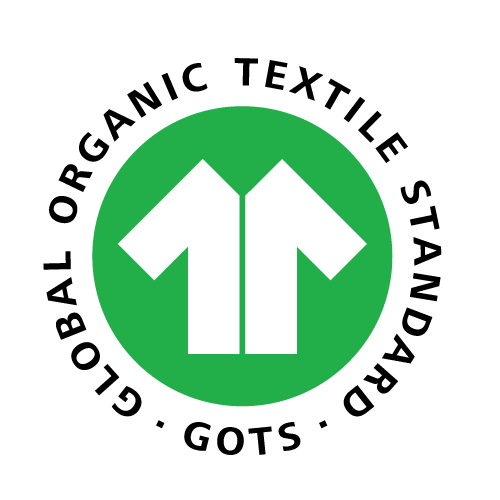
GOTS certified means a textile product has met the Global Organic Textile Standard; a worldwide certification that requires organic fibre sourcing, chemical-free processing, and fair labour standards at every stage of production, from field to finished garment.
Acronyms often have a way of sounding important but intimidating (at least to me). In my quest to manufacture the best possible children’s socks on the market, I encountered so many acronyms in apparel manufacturing. It was overwhelming at first, but after some research, it quickly became clear to me which certifications or acronyms were truly relevant and which were not.
GOTS stands for Global Organic Textile Standard, which is a general description of the certification. It is a worldwide leading textile processing standard for organic fibres. It has set down requirements across the entire supply chain for both ecological and labour conditions in textile and clothing manufacturing. All chemical inputs, such as dyestuffs and auxiliaries used must meet stringent environmental and toxicological criteria for certification to hold.
The use of chemicals in clothing, even in baby/kids clothing, is astounding. As a new mom, I spent hours scouring the internet for the most chemical-free products for baby, and I was astounded by what I found. While there were a lot of options for chemical-free skincare products, chemical-free clothing, toys and other baby gear were much harder to come by. If you're new to the world of organic fabrics, our guide on organic cotton vs regular cotton explains the fundamental differences in how each is grown and processed. The sad reality is that even knowing where a product is made doesn’t guarantee it is chemical and harmful substance-free. A study by the NAFTA environment protection agency found dozens of Canadian-made and imported products, including baby bibs, mats, and blankets, contained chemicals with known links to cancer and hormone-related illnesses. Another test by the EWG shows concerning levels of toxic chemicals in baby textile products.
My son goes through 3-4 bibs a day and has worn a bib since he was a few days old. He literally wears a bib all day, every day! I feel worried knowing that his bibs could've contained harmful chemicals. I was shocked and saddened to hear this, and unfortunately, this is the reality of the world we live in now.
This concern extends beyond children's clothing—adults, too, should be mindful of what they wear, especially undergarments that sit closest to the skin. As a mom, I choose to wear 100% organic cotton underwear to ensure breathability, comfort, and a reduced risk of exposure to harmful chemicals commonly found in synthetic fabrics.
What Does GOTS Certified Organic Cotton Actually Require?
Saying a product is 'GOTS certified' is easy. Understanding what that certification actually requires is what separates it from every other organic claim. GOTS sets binding requirements across seven areas — all of which must be met before a licence is granted and maintained:
| Requirement Area | What GOTS Requires | Why It Matters |
|---|---|---|
| Fibre origin | ≥ 95% certified organic fibre (or ≥ 70% for 'made with organic' label) | Ensures the cotton was grown without synthetic pesticides or GMO seeds from the start |
| Prohibited chemicals | No chlorine bleach, formaldehyde, heavy metal dyes, azo dyes, or carcinogenic substances | Eliminates the chemical residues most associated with fabric-related skin reactions |
| Wastewater treatment | All wet-processing facilities must treat wastewater before discharge | Protects local water systems from dye and chemical runoff |
| No GMO seeds | Organic cotton must be grown from non-genetically modified seeds | Genetic modification is incompatible with organic farming practices |
| Social standards | Fair wages, no child or forced labour, safe working conditions, right to collective bargaining | GOTS is one of few textile standards with binding social criteria |
| Annual audit | Third-party inspection of every certified facility, every year | Prevents certification being a one-time exercise — standards must be maintained continuously |
| Full traceability | Certification covers every stage from fibre to finished product | No greenwashing gap — a GOTS label on the garment means the whole chain qualifies, not just one step |
The key distinction from other 'organic' claims
Many brands describe their cotton as organic based only on how it was grown, the farm-level certification. GOTS covers the entire chain. Cotton grown organically can still be processed with harmful dyes, chlorine bleach, or formaldehyde. GOTS prevents this at every stage. A GOTS licence number on a garment means every facility that touched it — from the spinning mill to the final cut-and-sew factory — was audited against these criteria. By choosing a GOTS certified product, you are not only choosing to keep away chemicals from your baby’s skin but also minimizing the impact of your purchase on our planet.
Environmental Benefits of GOTS Certified Organic Cotton
GOTS-certified garments have serious environmental benefits. I have summarized these benefits below:
- The chemicals and pesticides used in the processing of conventional cotton is harmful to workers and our planet.
- Water savings - organic cotton farming uses up to 91% less water than conventional cotton (Textile Exchange Organic Cotton Market Report) — a significant impact given cotton is one of the world's most irrigation-intensive crops.
- If you buy a shirt made from organic cotton or wool and you wear it until the end of its life, you could throw it in the ground, and it will compost. If you throw away a shirt made from petroleum, it’s going to continue to pollute the environment and will probably live in a landfill forever.
Why 'Organic' on a Label Isn't Enough
When it comes to organic cotton, just because a label says 'organic' doesn't make it so — and the financial incentive to lie is significant. There are no legal repercussions in most markets for calling a product 'organic' without any certification. Cotton can be grown on an organic farm and still be subjected to aggressive chemical processing that harms workers and the environment. This greenwashing gap is exactly why the GOTS certification exists: it covers every step of the process, not just the farming. The GOTS logo, combined with a verifiable licence number, is currently the most reliable way to confirm that a textile product is genuinely organic from field to finished garment. Unlike a brand's self-reported 'organic' marketing, GOTS requires annual third-party audits of every facility in the production chain.
GOTS vs. OEKO-TEX Standard 100: What's the Difference?
OEKO-TEX® STANDARD 100 certification is another important certification for organic clothing as it verifies finished textile product, every thread, button, and accessory, has been tested against over 1,000 harmful substances and found to be safe for human health. Both certifications appear on Q for Quinn products, but they answer different questions. This is the comparison people search for most.
| GOTS Certified | OEKO-TEX Standard 100 | |
|---|---|---|
| What it certifies | The entire supply chain: farming, processing, manufacturing, AND social standards | The finished garment has been tested and found free from 1,000+ harmful substances |
| Fibre origin | Must be ≥ 95% certified organic fibre — grown without synthetic pesticides or GMOs | Not certified — cotton can be conventionally grown |
| Chemical processing | Prohibits harmful dyes, formaldehyde, heavy metals, chlorine bleach throughout production | Tests finished product; does not regulate how it was processed |
| Social standards | Yes — fair wages, no child labour, safe working conditions required | No social criteria |
| Annual renewal | Yes — annual audit by accredited body | Yes — annual re-testing of finished product |
| Verification | global-standard.org → enter licence number | oeko-tex.com/label-check → enter certificate number |
| What it doesn't cover | Individual product toxin testing at finished-garment level | Fibre origin; farming practices; social conditions |
| Gold standard? | ✓ Best for full supply chain confidence | ✓ Best for chemical safety of the finished item |
| Q for Quinn holds both? | ✓ Yes — Ecocert Greenlife, Licence #256894 | ✓ Yes — every product tested |
The short answer: GOTS is about how your cotton was grown and made. OEKO-TEX is about whether the finished garment you're holding is chemically safe to wear. Both matter, which is why Q for Quinn products carry both certifications.
Where GOTS Certified Cotton Matters Most
The case for GOTS-certified organic cotton is strongest for items worn directly against the skin for extended periods. The basics layer, the garments that sit closest to your body all day, is where the certification makes the biggest practical difference.
Kids Clothing
Children's skin is thinner and more permeable than adult skin, which means chemical residues in fabric are absorbed more readily, making the certification argument even stronger for kids. The 9 out of 10 conventional baby socks found to contain BPA and parabens is exactly the reason Q for Quinn started as a children's brand. Our organic cotton socks for kids and toddlers, and organic cotton underwear for toddlers and kids, are made to the same GOTS + OEKO-TEX standard as every other product in our range, no separate 'kids line' with lower standards.
Underwear
Underwear is in continuous contact with sensitive skin for hours at a time. Conventional cotton underwear can carry residues of pesticides, formaldehyde from wrinkle-resistant finishes, and chemical dyes. Switching to GOTS-certified organic cotton removes all of these. Q for Quinn's organic cotton women's underwear is GOTS + OEKO-TEX dual certified. If you prefer no dyes at all, our natural dye-free underwear contains zero dye residues, just pure organic cotton. For those looking for the lowest environmental footprint, our plastic-free organic underwear is made to biodegrade at end of life.
Socks
The same BPA and parabens found in conventional cotton baby socks are a concern for adult socks too, particularly for people with sensitive feet or conditions like eczema. Our 1-100% organic cotton socks are made in GOTS and OEKO-TEX-certified facilities, the same standard we apply to every product. For those who want to avoid dyes entirely, our dye-free organic cotton socks are undyed and unbleached.
Bras and Bralettes
A bra is worn for hours against skin that is delicate and prone to heat and friction. Organic cotton bras avoid the chemical processing typical of synthetic blends. Our 100% organic cotton bras and bralettes contain no synthetic blends or chemical dye finishes.
Active Wear
During exercise, skin temperature rises and pores open; chemical residues in fabric are most likely to be absorbed at exactly this moment. Our active organic cotton underwear is certified organic cotton designed for movement, breathable and chemical-free.
FAQs
How to Verify a GOTS Certificate
- Find the GOTS logo on the product, its label, or the brand's website
- Note the licence number (e.g. Q for Quinn's is #256894)
- Visit global-standard.org and use the public database search
- Enter the licence number or brand name — results show certified facilities, products covered, and certificate validity
- If a brand cannot provide a licence number, their 'GOTS certified' claim is unverified
What is GOTS?
GOTS certified means a textile product meets the Global Organic Textile Standard — a worldwide certification that requires the use of certified organic fibres (no synthetic pesticides or GMO seeds), chemical-free processing throughout the supply chain, compliance with social standards including fair wages and no child labour, and annual third-party audits of every facility involved. It is widely recognised as the most rigorous organic textile certification available.
What does GOTS certified mean for clothing?
For clothing, GOTS certification means the garment was made from organically grown fibre and processed without harmful chemicals, including no chlorine bleach, no formaldehyde, no carcinogenic azo dyes, and no heavy metal dyes, at every stage of production from raw fibre to finished garment. It also means the factories involved met social standards for worker conditions. A GOTS licence number on a garment can be verified in real time at global-standard.org.
Is GOTS the best certification for organic cotton clothing?
Yes, GOTS is widely recognised as the most comprehensive certification available for organic cotton textiles. It is the only major standard that covers the full supply chain from organic fibre through to finished garment, while also including binding social criteria for workers. Other certifications like OCS (Organic Content Standard) cover fibre origin only; OEKO-TEX covers chemical safety in the finished product, but not farming practices. GOTS covers all three dimensions.
Are Q for Quinn socks GOTS certified or OEKO-Standard 100 certified?
Every pair of our socks is made in a facility that is OEKO-Standard 100 and GOTS (Global Organic Textile Standard) certified, making our socks the safest and most eco-conscious purchase decision for your family.
We received our GOTS (Global Organic Textile Standard) certification at a brand level in January 2021. Being a GOTS certified brand means that every year we are audited against the highest environmental and social standards (that our suppliers are audited against). We are so proud to be a GOTS-certified company and are updating our packaging with our certificate and the GOTS logo! Our license number is #256894.



Excellent Post! you have totally described the GOTS certified organic cotton. Everyone wants to need to learn this type of information. Thanks again for sharing an informative blog.
Leave a comment