Organic Cotton vs Regular Cotton: What's the Difference and Why Does It Matter?
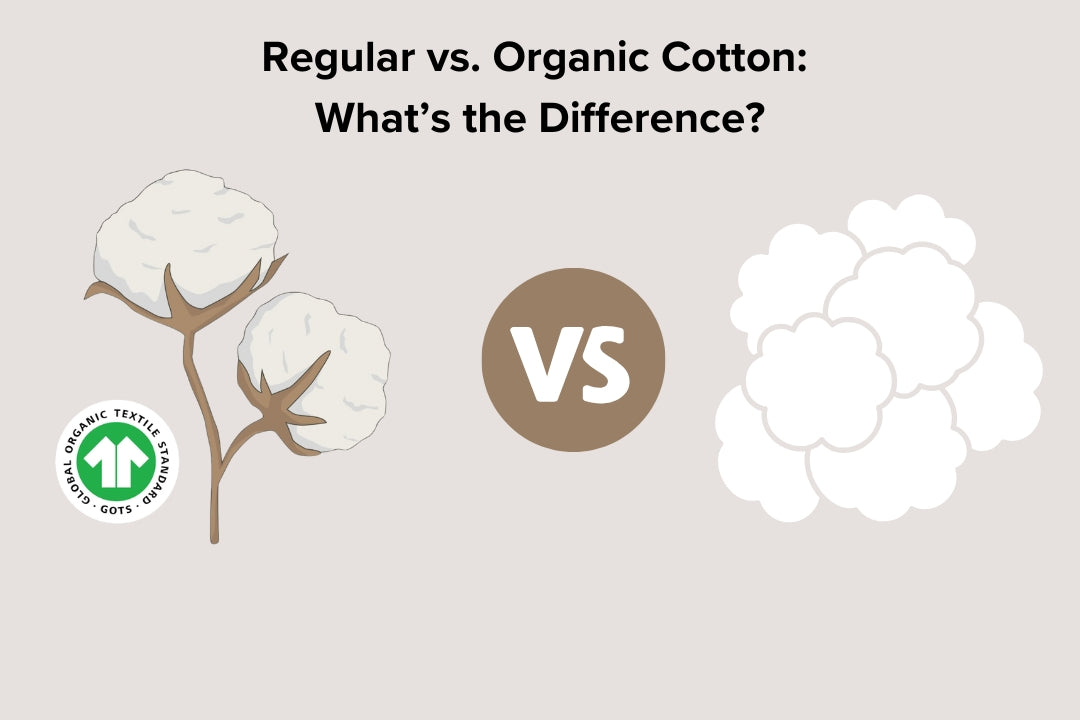
Organic cotton and regular cotton come from the same plant, but that's where the similarity ends. Organic cotton is grown without synthetic pesticides, chemical fertilizers, or GMOs, and processed without harmful dye chemicals or finishes. Regular (conventional) cotton is one of the most chemically intensive crops on the planet, accounting for roughly 16% of all global insecticide use. The differences show up in the soil, in the water supply, in the health of the farmers who grow it, and, most relevantly for you, in the fabric that sits against your skin every day. This guide covers everything you need to know.
What is Organic Cotton?
Organic cotton is cultivated without synthetic pesticides, herbicides, or fertilizers. Instead, farmers rely on natural methods such as crop rotation, composting, and biological pest control to maintain soil fertility and sustainability. This eco-friendly approach minimizes environmental damage and reduces cotton production's carbon footprint.
Certifications matter; unlike conventional cotton, organic cotton is subject to strict certification processes to ensure ethical and sustainable practices. The Global Organic Textile Standard (GOTS) and OEKO-TEX Standard 100 are two leading certifications that guarantee organic farming methods and chemical-free processing.
Explore Q for Quinns GOTS Certified Organic Cotton Collections and Products
Being a GOTS-certified company (certified by Ecocert Greenlife; Licence #256894) at Q for Quinn, all organic cotton products meet these high standards, ensuring you receive the purest and safest fabric.
What is Regular Cotton?
Regular cotton, also known as conventional cotton, is the most widely used type of cotton in the textile industry. It is grown using traditional farming methods, often involving synthetic pesticides, chemical fertilizers, and genetically modified (GM) seeds to increase yield and pest resistance.
Conventional cotton farming requires excessive water, often leading to drought conditions in certain regions. The high use of pesticides and fertilizers contaminates soil, water sources, and local ecosystems.
Farming Practices: Organic vs. Conventional Cotton
One of the main differences between organic and regular cotton is the farming process:
Organic Cotton Farming
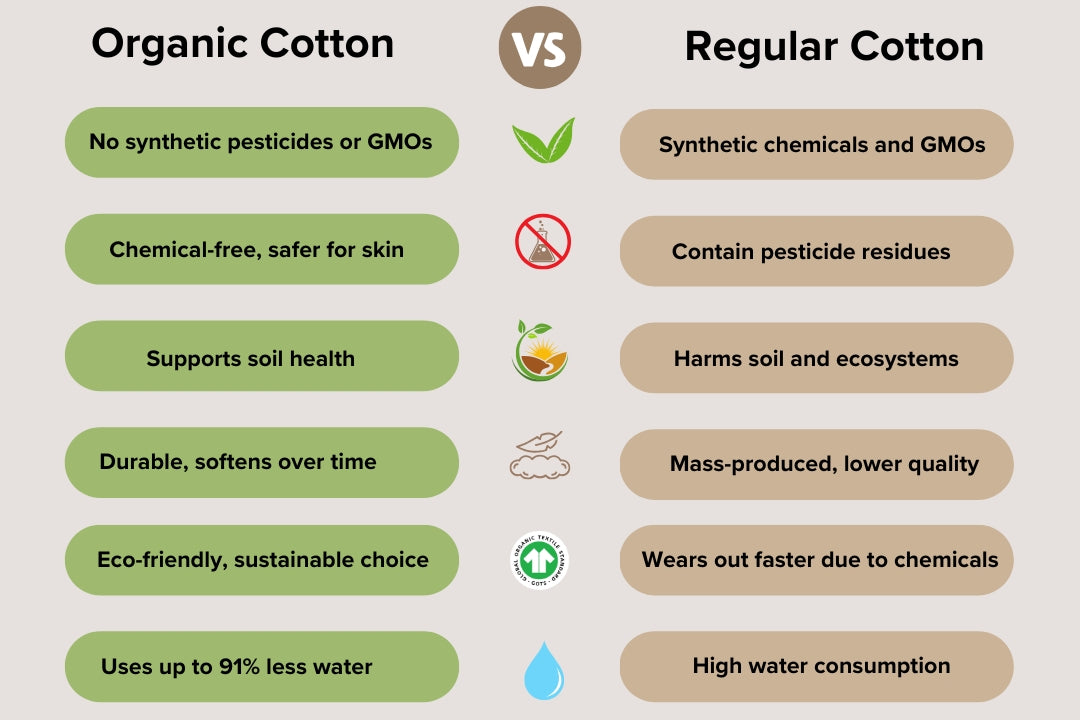
- No synthetic pesticides or GMOs.
- Uses crop rotation to maintain soil fertility.
- Relies on natural pest control methods.
- Promotes biodiversity and reduces water consumption.
Regular Cotton Farming
- Uses chemical pesticides and fertilizers.
- Involves genetic modification to boost yield.
- Depletes soil quality over time.
- Contributes to water pollution due to chemical runoff
Health Benefits: Why Organic Cotton is Safer
Regular cotton contains pesticide residues that may linger in the fabric, potentially causing skin irritations and allergic reactions. This especially concerns individuals with sensitive skin, eczema, or dermatitis. Organic cotton, like that offered by Q for Quinn, is free from harmful chemicals, making it a gentler and safer choice.
The benefit is greatest for items worn directly against skin for the longest periods. Underwear and socks are in continuous contact with sensitive skin for hours at a time; they are the highest-priority switch if you're looking to reduce chemical residue exposure from fabric. The same applies to bras, which sit against delicate skin through the entire day. For active use specifically, skin temperature and perspiration increase fabric absorption, making a chemical-free fabric more important, not less.
Environmental Impact: A Sustainable Choice
The environmental benefits of organic cotton are undeniable:
- Water Conservation: According to the Textile Exchange’s study, organic cotton farming uses up to 91% less water than conventional cotton.
- Reduced Carbon Emissions: According to the Soil Association research, organic cotton production emits up to 46% less CO₂ without synthetic fertilizers.
- Soil Health: Organic farming promotes soil regeneration, preventing long-term degradation.
At Q for Quinn, sustainability is at the core of our mission. By choosing our organic cotton products, you support responsible farming practices that protect the planet.
Cost Comparison: Is Organic Cotton Worth the Price?
Organic cotton is typically more expensive due to its labor-intensive farming methods and stringent certification processes. However, when considering the environmental and health benefits, many consumers find it a worthwhile investment.
While conventional cotton may be cheaper upfront, its long-term impact on the environment and human health can be costly. Investing in Q for Quinn’s high-quality organic cotton makes you make a conscious choice for a healthier and more sustainable future.
How to Identify Authentic Organic Cotton
When shopping for organic cotton, look for GOTS-certified and OEKO-TEX Standard 100 labels. These certifications guarantee the product is free from harmful substances and meets strict environmental standards. Q for Quinn ensures all products meet these high-quality standards, providing transparency and trust to our customers.
Is 100% organic cotton the same as 100% cotton?
No. "100% cotton" simply means the fabric is made entirely of cotton, but it does not specify if it was grown organically. Only certified organic cotton ensures the absence of pesticides and harmful chemicals.
Does organic cotton last longer than regular cotton?
Yes, organic cotton generally lasts longer than regular cotton due to its higher fiber quality and gentler processing methods. However, its durability also depends on how the fabric is woven, treated, and cared for.
Is organic cotton better for sensitive skin and eczema?
Yes. Organic cotton is grown without synthetic pesticides and processed without formaldehyde, chemical dyes, or finishing treatments that are common in conventional cotton. For people with eczema, contact dermatitis, or chemical sensitivities, these residues can trigger or worsen reactions. GOTS-certified organic cotton eliminates those residue sources. For items worn directly against sensitive skin, underwear, socks, and bras in particular, organic cotton is the recommended choice by dermatologists who advise on fabric-related skin reactions.
Can I trust 'organic cotton' on a label without a certification?
No. 'Organic cotton' is not a legally protected term in most countries. Any brand can print it on a label without verification. The only way to confirm a product genuinely meets organic standards is third-party certification: GOTS (for full supply chain organic compliance) or OCS (Organic Content Standard, for fibre origin only). Without a named certification body and a verifiable licence number, an 'organic' claim is marketing, not proof.
Is organic cotton worth the higher price?
For everyday basics that sit directly against your skin, underwear, socks, bras, most people with sensitive skin find it worth it. The premium is typically 20–50% over conventional equivalents. Organic cotton garments tend to last longer due to stronger fibers, which lowers the real cost-per-wear over time. Beyond personal benefit, the environmental case is strong: 91% less water, 46% less CO₂, and no synthetic pesticide runoff into local water systems.
Final Thoughts: Making the Right Choice
The decision between organic and regular cotton mainly focuses on health, sustainability, and long-term quality. While conventional cotton remains widely available, its environmental and health disadvantages are significant. Q for Quinn’s commitment to premium organic cotton ensures you get comfort, safety, and sustainability.
By choosing organic, you’re not just buying a product—you’re supporting ethical farming, reducing environmental impact, and investing in a healthier future.